How To Create A Wedding Budget And Stick To It
 You’ve probably heard that weddings can get expensive fast, but sitting down to create a wedding budget feels overwhelming for a lot of couples. I’ve seen the stress firsthand; hidden costs, surprise upgrades, and the pressure to make everything perfect for the big day can be intense. Even with so much choice and inspiration online, figuring out what you can actually afford (and how to stick with it) is a real challenge.
Every couple wants to celebrate their love in a way that feels special, but it’s so easy to lose track of spending (been there!). Creating a simple plan not only helps you manage money, but it keeps your wedding enjoyable instead of stressful.
This step-by-step guide breaks down how to set a realistic wedding budget, track your choices, and steer clear of common budget blowouts. It works for any wedding size, from small backyard gatherings to larger celebrations. With clear steps, you’ll keep things stress-free and have a wedding day you’re excited about sharing.
Step 1: Figure Out Your Total Wedding Budget
The first thing I always recommend is figuring out exactly how much you want to spend from the start. This number is your anchor; almost every wedding decision comes back to it.
Questions That Help Pin Down the Budget
- Who is contributing to the wedding fund? (You, your partner, family, others?)
- Are there savings set aside or will you need to save as you go?
- Does anyone want to pay for a specific part (like the dress, venue, or rehearsal dinner)?
- What’s your comfortable max number? This should be an amount that won’t keep you up at night.
Personal Example
When I planned my own wedding, I talked openly with my partner and our families about who wanted to chip in for what, and what everyone’s comfort zone was. The whole process felt much more relaxed when everyone was clear about the money from the start.
Once you set this number, stick to it! It’s there to guide all your choices, big and small.
Consider setting up a separate bank account for your wedding fund; this makes it plain what you have and easy to track each payment that goes out. This kind of transparency leads to less stress later in planning.
Step 2: Identify Your Wedding Priorities
Not everything deserves the same chunk of the budget. This is where you get to decide what matters most for you both as a couple. Maybe you want amazing food, a live band, or an eye-catching floral display. Or, perhaps you’d rather save on decor and put more money toward a great photographer.
How To Rank Your Priorities
- Make a list of must-haves. (Venue, dress, food, photography, music, etc.)
- Have each partner pick their top 3 items; this highlights what’s important for both.
- Decide what you’re willing to DIY, skip entirely, or budget for later, like honeymoon expenses.
Putting cash behind the things you care about means you can scale back on other items without regrets. Being honest about what you truly want lets you focus your energy, too; there’s no sense stressing over favors if you really want to set free your creativity on the reception playlist.
Step 3: Break Down Your Spending By Category
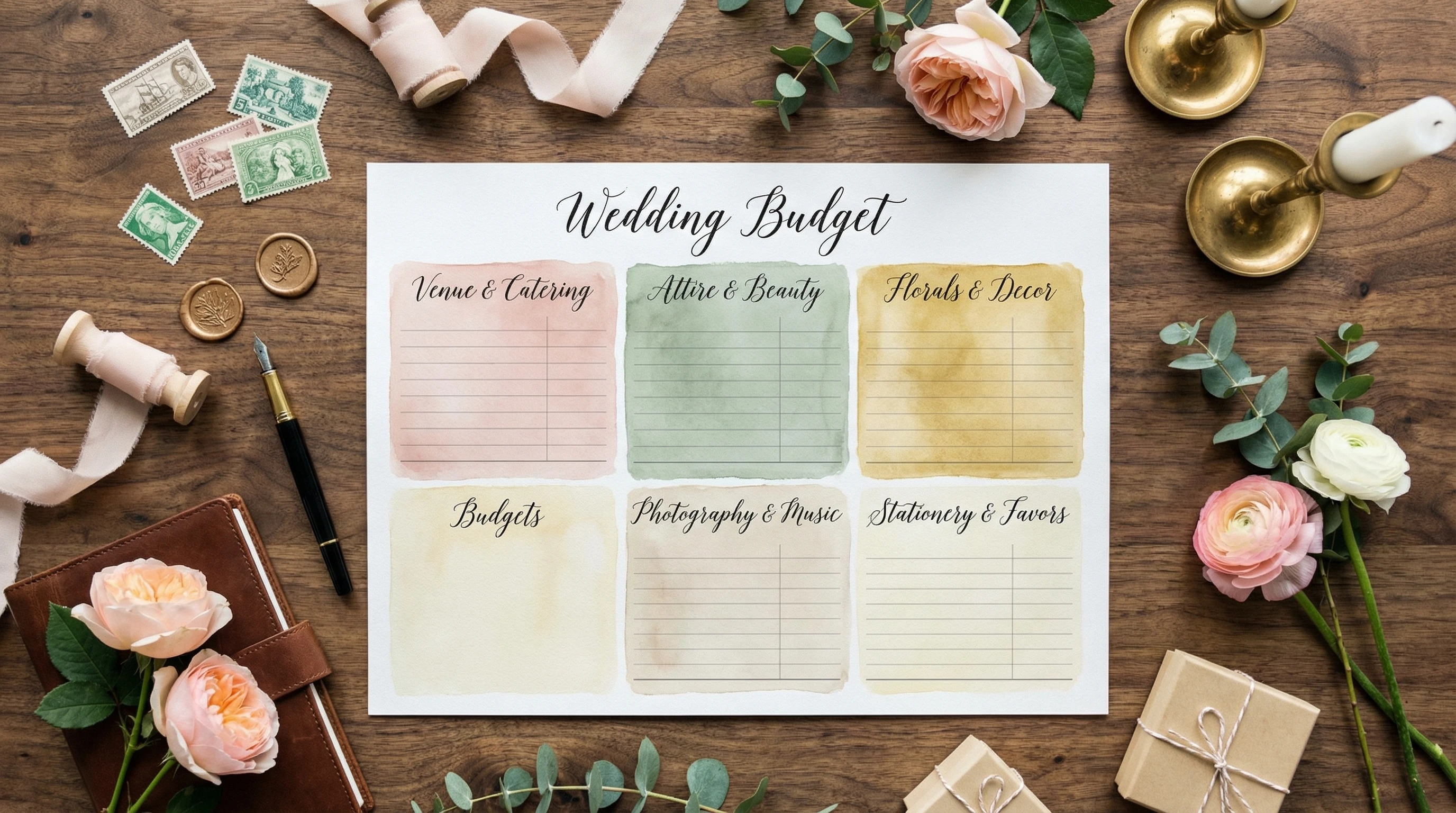
Creating budget categories keeps you from getting lost in a sea of receipts or accidentally spending $2,000 more on flowers than you really meant to. I find a spreadsheet helps, but you can also find free printable worksheets online.
Typical Wedding Budget Categories
- Venue and Rentals
- Catering (Food and Drinks)
- Attire (Wedding dress, suit, hair, makeup, accessories)
- Photography & Videography
- Flowers & Decor
- Music & Entertainment
- Invitations & Stationery
- Transportation
- Officiant and Ceremony Costs
- Favors & Gifts
- Miscellaneous (insurance, permits, tips)
Start by assigning rough percentages to each area. For example, many couples spend about 40–50% on venue and catering, with the rest going to everything else. Adjust the numbers based on your own priorities; there’s no single “right” split!
Don’t forget to include set up and breakdown fees that venues may charge. Ask vendors if their quotes are “all in” or just for base services. Laying out each part clearly will save a ton of hassle down the line.
Step 4: Research Prices and Get Quotes
Before locking any numbers in, take time to gather real-world prices in your area. Prices can swing wildly by city, season, and vendor popularity. Reach out to vendors, ask friends who’ve married recently, and check wedding forums for ballpark figures.
Why Research Pays Off
- Prevents surprises and disappointment from underestimating costs.
- Makes comparing vendors straightforward, so you can compare apples to apples.
- Helps you spot hidden fees or extras that aren’t obvious in quotes.
When I helped a friend plan her wedding, we found big differences in catering quotes; sometimes, the price was more than double for the same guest list! Seeing the numbers side by side made it easy to make smart picks for both quality and price.
It helps to make a list of questions before contacting each vendor. Things like “Are delivery and setup included?” and “Are there overtime fees?” can help you avoid costly surprises. Don’t hesitate to ask for custom quotes if your needs fall between standard packages.
Step 5: Track Spending As You Go
The budget only works if you keep an eye on it. I recommend updating your spreadsheet or budget app every time you make a payment, place an order, or get a refund. Don’t rely on memory; little things add up quickly.
Tools That Make Tracking Easier
- Budget apps (like Mint or Zola) to track all expenses in one place.
- Shared Google Sheets with real time updates for you and your partner.
- Reminders for payment due dates so nothing is missed.
Check your budget at least once a week to keep things under control and address overruns early. Doing this together can help you both stay accountable and reduce money misunderstandings.
Step 6: Handle Surprises and Hidden Costs
No matter how well you plan, extra costs pop up. Think last minute dress alterations or extra transport. I always suggest setting aside 5–10% of your total budget just for the unexpected. If you don’t need it, great, you’ve got extra money for your honeymoon!
Common Hidden Wedding Expenses
- Gratuities for vendors (catering staff, drivers, makeup artists)
- Marriage license or legal paperwork
- Cake cutting or corkage fees
- Overtime charges for venues, DJs, or photographers
- Service fees, taxes, and delivery charges
Mark these on your spreadsheet so there are no surprises later. Being upfront about potential extras means you’ll be less rattled if something unexpected comes up on your big day.
Step 7: Say No and Make Adjustments
You’ll likely get offers or hear ideas from friends, family, or vendors about add-ons you “just have to have.” Staying firm on your budget sometimes means saying no. If you decide to splurge in one area, cut back somewhere else. The key is keeping your main priorities the focus.
How to Stay On Track
- Review spending after each big purchase.
- If you go over in one category, trim another.
- Use your prioritized list for honest conversations with anyone offering ideas.
It’s your wedding! The goal is to start married life feeling happy about your choices, not weighed down by bills. Being able to say “no” politely but firmly, even when you feel pushed, is a great skill that goes well beyond wedding planning.
Frequently Asked Questions
How do I save money on my wedding without making it feel cheap?
Focus spending where it matters to you both, like good food or a fun band. Cut back on small details that guests may not even notice, such as fancy invitations or elaborate favors. DIY projects can help with decor too, as long as you don’t take on more than you can manage comfortably. Also, borrowing decor items or wearing family jewelry can add meaning while saving cash.
What should I do if my family wants a bigger wedding than I can afford?
Have an honest conversation early. If they’re contributing, ask if they’d be comfortable increasing their help or scaling back some aspects. Remind everyone that the goal is a meaningful, joyful day, not a financial struggle. If needed, set clear boundaries about the guest list or level of grandeur, and stick to your comfort zone.
How early should I start budgeting for my wedding?
The sooner, the better; ideally, start right after your engagement. This gives you more time to save, compare vendors, and make careful choices instead of feeling rushed. Even rough numbers are better than nothing in the early stages. Early planning also means snagging deals on venues or popular vendors who book up fast.
Next Steps for Wedding Budget Success
Sticking to a wedding budget is about teamwork, honest communication, and tapping into your creativity. Here are a few practical next steps to help keep things simple:
- Set your overall spending limit and talk through priorities with your partner.
- Break down costs by category and get estimates before booking anything major.
- Check spending regularly and stay flexible when plans change. Adjust as needed; don’t be afraid to switch things up to stick to what matters most.
Your dream wedding can stay affordable with some planning and a little teamwork. Enjoy every step of the process—it’s all part of the celebration. Keep your eyes on the big picture, celebrate your wins, and know that the memories matter much more than the numbers.